

Class 10 Science Chapter 6 Life Processes
Are you searching for the best study material for Class 10 Science Chapter 6 Life Processes? You’ve come to the right place! This chapter is one of the most important topics in Biology and explains the essential life processes that help living organisms survive and function. Here, you will find easy notes, complete textbook question answers, important questions, and exam-oriented study materials to make your preparation simple and effective.
In this chapter, you will learn about the basic life processes such as nutrition, respiration, transportation, and excretion in plants and animals. It also explains the human digestive system, respiratory system, circulatory system, and excretory system in a simple and easy-to-understand way. These concepts are important not only for board examinations but also for building a strong foundation in Biology.
The study material is prepared in simple, clear, and student-friendly English, making it easy for every student to understand and remember important concepts. It is perfect for daily learning, quick revision, and last-minute exam preparation.
Whether you are preparing for class tests, annual examinations, or the HSLC Board Examination, this chapter will help you strengthen your Biology concepts, improve your confidence, and score better marks in Science.
✨ What You’ll Get:
- 📘 Easy & Simple Chapter Notes
- ❓ Complete Textbook Question Answers
- ⭐ Important Exam-Oriented Questions
- 📝 Quick Revision Notes
- 🎯 HSLC Board Exam Preparation
- 💡 Simple Explanations for Better Understanding
Start learning Class 10 Science Chapter 6 Life Processes today and make your Science preparation easier, smarter, and more effective.
Class 10 Science Chapter 6 Life Processes
Selected Questions &Answers
Q: What raw materials necessary for life do organisms obtain from the external environment?
Ans: They obtain carbon dioxide from the atmosphere, light from the sun, and water and minerals from the soil.
Q: What are autotrophic organisms? Give one example.
Ans: Organisms that can prepare their own food are called autotrophic organisms. For example, plants.
Q: Write the function of salivary amylase.
Ans: Salivary amylase breaks down the starch component of food into simple sugars.
Q: What is the role of hydrochloric acid in the stomach?
Ans: Hydrochloric acid in the stomach enhances the activity of pepsin.
Q: What are gastric glands?
Ans: The glands that secrete digestive juices in the stomach are called gastric glands.
Q: What are heterotrophic organisms? Give an example.
Ans: Organisms that depend on other organisms for nutrition are called heterotrophic organisms. For example, fungi.
Q: Why are plant leaves green in color?
Ans: Leaves are green because they contain chloroplasts (chlorophyll).
Q: What is photosynthesis?
Ans: The process by which plants prepare food using carbon dioxide from the atmosphere and water from the soil in the presence of sunlight is called photosynthesis.
Q: Write the function of mucus.
Ans: Mucus protects the inner lining of the stomach from the action of acid.
Q: What is the structure of the stomach in herbivorous animals?
Ans: To digest cellulose present in grass-type plants, herbivorous animals have a long and coiled small intestine.
Q: What organs form the human excretory system?
Ans: The human excretory system consists of a pair of kidneys, a pair of ureters, a urinary bladder, and a urethra.
Q: What raw materials do organisms obtain from the external environment?
Ans: Heterotrophic organisms obtain oxygen and food from the external environment. On the other hand, autotrophic organisms obtain carbon dioxide and water from the environment.
Q: What is the function of trypsin?
Ans: Trypsin acts as a protein-digesting enzyme in the pancreas.
Q: Write the function of intestinal juice.
Ans: Intestinal juice converts proteins into simple amino acids, carbohydrates into glucose, and fats into fatty acids and glycerol.
Q: Write one difference between autotrophic and heterotrophic nutrition.
Ans: In autotrophic nutrition, organisms prepare their own food. On the other hand, in heterotrophic nutrition, organisms depend on others for nutrition.
Q: Why is fermentation called anaerobic respiration?
Ans: Fermentation occurs in the absence of oxygen, so it is called anaerobic respiration.
Q: Where is haemoglobin found?
Ans: Haemoglobin is found in red blood cells.
Q: Write the function of plasma in blood.
Ans: Plasma transports dissolved food substances, carbon dioxide, and nitrogenous waste materials.
Q: How many chambers does the human heart have?
Ans: It has four chambers.
Q: Where is blood purified in our body?
Ans: In the kidney.
Q: How many chambers does the heart of amphibians or reptiles have?
Ans: It has three chambers.
Q: Write the function of veins.
Ans: Veins carry blood from different parts of the body to the heart.
Q: What is transpiration?
Ans: The process by which excess water absorbed by plants is released as vapour through aerial parts is called transpiration.
Q: What are the components of the transport system in higher plants? HSLC ’18
Ans: The transport system in higher plants has two components:
(a) Xylem tissue and
(b) Phloem tissue.
Q: How are water and minerals transported in plants?
Ans: Water and minerals are transported through xylem tissue. Water and minerals absorbed by the roots move from the root cortex to the xylem through processes like absorption, osmosis, and diffusion.
Q: Which processes are essential for maintaining life?
Ans: The essential processes for maintaining life are nutrition, respiration, transport, movement, and excretion.
Q: What are the differences between autotrophic and heterotrophic nutrition?
Ans:
Autotrophic organisms prepare their own food.
Heterotrophic organisms depend directly or indirectly on autotrophs.
Autotrophic organisms require the presence of chlorophyll.
Heterotrophic organisms do not require chlorophyll.
Q: What advantage do aquatic organisms have over terrestrial organisms in obtaining oxygen for respiration?
Ans: Terrestrial animals have a lower breathing rate than aquatic organisms because water contains less dissolved oxygen than air.
Q: How are oxygen and carbon dioxide transported in the human body?
Ans: Haemoglobin in red blood cells has a high affinity for oxygen. It combines with oxygen to form oxyhaemoglobin and transports it from the lungs to body tissues. Carbon dioxide is more soluble in water than oxygen, so it is transported from body tissues to the lungs through blood. Thus, blood plays an important role in transporting these gases.
Q: Where do plants obtain the components required for photosynthesis?
Ans: Plants obtain carbon dioxide from the atmosphere and water from the soil through roots. Aquatic plants obtain carbon dioxide dissolved in water. Sunlight is obtained from the sun.
Q: What is the function of digestive enzymes?
Ans:
(a) They break down complex starch into simpler molecules.
(b) They help in the digestion of proteins.
(c) They bring about changes in insoluble fats.
(d) They convert proteins into amino acids, complex carbohydrates into glucose, and fats into fatty acids and glycerol.
Q: How is food digested in the small intestine so that it can be absorbed?
Ans: Food is completely digested in the small intestine. The inner wall of the small intestine has finger-like projections called villi. These are covered with a network of blood capillaries. These capillaries absorb digested food and transport it to different body cells.
Q: How are human lungs structured for efficient gas exchange?
Ans: Human lungs contain balloon-like structures called alveoli. The walls of alveoli are very thin, allowing easy gas exchange. Each alveolus is surrounded by a dense network of blood capillaries with thin walls, enabling efficient diffusion of gases.
Q: What are the main components of the human transport system and their functions?
Ans:
(a) Blood: It is the fluid medium that transports substances like nutrients, waste, respiratory gases, hormones, and enzymes.
(b) Blood vessels: Blood flows through a network of vessels. These are of two types—arteries and veins. Arteries carry blood from the heart to different body parts, while veins carry impure blood back to the heart.
(c) Heart: It acts as a pump. Its contraction and relaxation keep blood circulating continuously.
Q: Why is it necessary to keep oxygenated and deoxygenated blood separate in birds and mammals?
Ans: Birds and mammals are warm-blooded animals that maintain a constant body temperature. They require a large amount of energy, which needs more oxygen. Therefore, oxygenated blood should not mix with deoxygenated blood.
Q: How is food transported in plants? HSLC ’20
Ans: Food is transported through phloem tissue. It moves in both upward and downward directions. During transport, energy from ATP is used to load sugars into the phloem, increasing osmotic pressure, causing water to enter, and facilitating movement of food to required parts.
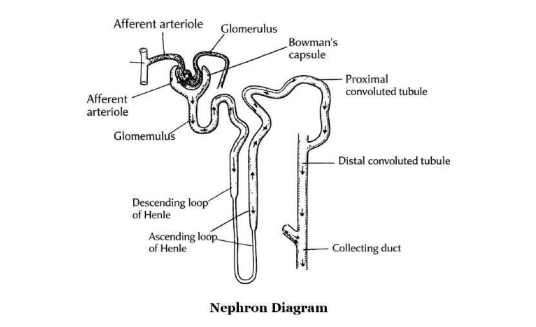
Q: Describe the structure and function of a nephron.
Ans: Structure: A nephron consists of a cup-shaped Bowman’s capsule containing a network of capillaries called the glomerulus. These capillaries have thin walls and high blood pressure.
Function: Nephrons initially filter glucose, amino acids, salts, and large amounts of water. Then selective reabsorption occurs in the tubules. Excess water and nitrogenous wastes are removed from the blood and excreted as urine.
Q: By what methods do plants excrete waste materials?
Ans:
(a) Plants remove excess water through transpiration.
(b) Other waste materials are excreted through dead cells and sometimes through parts like falling leaves.
(c) Plants store substances like resins and gums in old xylem tissue and later excrete them as waste.
(d) Some waste materials are stored in leaves, fruits, and stems.
Q: How can the amount of urine produced be regulated?
Ans: The regulation of urine production depends on the following factors:
(a) The amount of water that needs to be removed from the body.
(b) The amount of nitrogenous wastes such as urea, salts, and uric acid that need to be removed from the body.
Q: The two kidneys in humans are part of which system?
(a) Nutrition
(b) Respiration
(c) Excretion
(d) Transport
Ans: (c) Excretion
Q: The reaction in which pyruvate is broken down into carbon dioxide, water, and energy takes place in—
(a) Cytoplasm
(b) Mitochondria
(c) Chloroplast
(d) Nucleus
Ans: (b) Mitochondria
Q: How are fats digested in our body? Where does this process occur?
Ans: Large fat molecules present in the small intestine are difficult for enzymes to act upon. In the presence of bile salts, these are broken into smaller droplets. Then lipase present in pancreatic juice acts on them. Finally, enzymes in intestinal juice convert fats into fatty acids and glycerol, which are absorbed by the walls of the small intestine.
This process occurs in the small intestine.
Q: What is the role of saliva in digestion?
Ans: Saliva secreted from salivary glands first moistens and lubricates food. The enzyme amylase present in saliva breaks down complex starch into simple sugar molecules in the mouth.
Q: The function of xylem in plants is—
(a) Transport of water
(b) Transport of food
(c) Transport of amino acids
(d) Transport of oxygen
Ans: (a) Transport of water
Q: Autotrophic nutrition requires—
(a) Carbon dioxide and water
(b) Chlorophyll
(c) Sunlight
(d) All of the above
Ans: (d) All of the above
Q: What are the requirements for autotrophic nutrition? What are itsby-products?
Ans: Autotrophic nutrition requires photosynthesis. Carbon dioxide, water, chlorophyll, and sunlight are essential for this process. Through their interaction, glucose and oxygen are produced.
Q: What are the differences in transport between xylem and phloem?
Ans: (i) Xylem tissue transports water and minerals from the soil. On the other hand, phloem tissue transports prepared food to different parts of the plant.
(ii) In xylem, the direction of transport is upward. In phloem, transport occurs in both upward and downward directions.
(iii) Transport in xylem does not require energy; hence it is passive transport. In phloem, transport requires energy supplied by ATP.
Q: Compare the structure and function of alveoli and nephron.
Ans: The differences between alveoli and nephron are:
(i) Alveoli are balloon-like in shape, whereas nephrons are tubular in structure.
(ii) Alveoli are present in the lungs, whereas nephrons are present in the kidneys.
(iii) In alveoli, exchange of gases occurs by diffusion, whereas in nephrons, exchange of substances occurs due to pressure differences.
Q: What happens if the amount of oxygen in our body decreases?
Ans: If the oxygen level in our body decreases, there will be a deficiency of haemoglobin. As a result, a deficiency disease called anaemia may occur. Due to anaemia, blood cannot carry sufficient oxygen as required, leading to reduced respiration rate and insufficient energy production. Body weight decreases, and the body becomes pale.
Q: In which part of the digestive system is water absorbed?
Ans: In the large intestine.
Q: Name two types of tissues present in phloem.
Ans: Sieve tubes and companion cells.
Q: Name an organism that can live without oxygen.
Ans: Yeast.
Q: What are the cells present in xylem tissue?
Ans: Tracheids and xylem vessels.
Q: Name the substances secreted by gastric glands.
Ans: Hydrochloric acid, pepsin, and mucus.
Q: Which enzyme synthesizes proteins?
Ans: Protein synthesis occurs in ribosomes.
Q: What is the name of the pigment present in human blood? Where is it found?
Ans: The pigment in human blood is haemoglobin. It is found in red blood cells.
Q: What is the function of plasma in blood?
Ans: Plasma transports dissolved food substances, carbon dioxide, and nitrogenous wastes.
Q: What constitutes the human excretory system?
Ans: The human excretory system consists of a pair of kidneys, a pair of ureters, a urinary bladder, and a urethra.
Q: Give short answers:
(a) Which part of the brain controls hunger and thirst? HSLC ’18
Ans: Hypothalamus.
(b) What causes emulsification of fats? HSLC ’15
Ans: Bile salts.
(c) Name the enzyme that converts starch into simple sugars. HSLC’17
Ans: Amylase.
(d) What is the process by which an autotrophic organism fulfills its carbon and energy requirements? HSLC ’18
Ans: Photosynthesis.
Q: Name the respiratory component present in our blood. State its function. HSLC ’19
Ans: The respiratory component in our blood is red blood cells. Red blood cells transport oxygen and carbon dioxide.
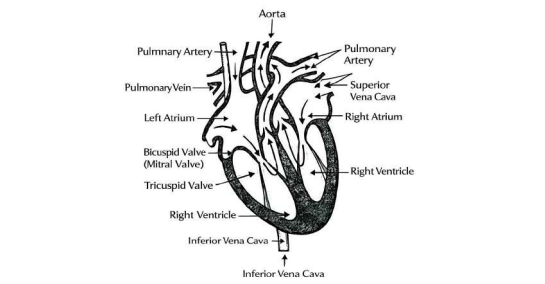
Q: Describe the flow of blood through the different chambers of the human heart. HSLC ’16, 19
Ans: In the human heart, deoxygenated blood is present in the right atrium and right ventricle, while oxygenated blood is present in the left atrium and left ventricle. The superior and inferior vena cava carry deoxygenated blood from the upper and lower parts of the body to the right atrium. From the right atrium, blood flows into the right ventricle through the tricuspid valve. The contraction of the right ventricle sends blood to the lungs through the pulmonary artery. From the lungs, oxygenated blood returns to the left atrium through the pulmonary veins. From the left atrium, it flows into the left ventricle and is then pumped to different parts of the body through the aorta.
Q: What is photosynthesis? What are the main events that occur during photosynthesis? How do plants absorb CO₂? HSLC ’16, 19
Ans: Photosynthesis is the process by which green plants prepare carbohydrates by reacting carbon dioxide and water in the presence of sunlight.
The main events in photosynthesis are:
(a) Absorption of light energy by chlorophyll.
(b) Conversion of light energy into chemical energy and splitting of water into hydrogen and oxygen.
(c) Formation of carbohydrates from carbon dioxide.
On the surface of plant leaves, there are small openings called stomata.
Carbon dioxide required for photosynthesis enters through these stomata. Since water is also lost through the same openings, the stomata close when carbon dioxide is not needed. The opening and closing of stomata are controlled by guard cells.
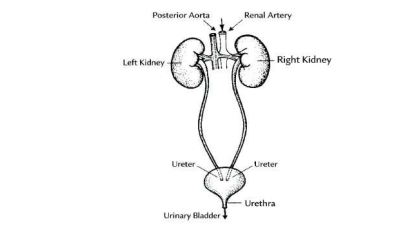
Q: Name the parts of the human excretory system. Describe urine formation and excretion. HSLC ’18
Ans: The human excretory system consists of four parts: kidneys, ureters, urinary bladder, and urethra.
(a) Kidney: The kidney is the main functional organ of the excretory system. Two kidneys are located on either side of the backbone just below the last ribs. The concave surface is called the renal hilum, through which blood vessels and the ureter enter. The inner funnel-shaped region is called the renal pelvis. Each kidney contains about one million nephrons, which are the structural and functional units. Urine is formed in the nephrons.
(b) Ureter: The ureter collects urine formed in the kidneys and carries it to the urinary bladder.
(c) Urinary bladder: It temporarily stores urine. It is sac-like in structure and releases urine periodically.
(d) Urethra: Urine is expelled from the urinary bladder through the urethra.
Q: Describe the process of breathing in humans. Why is the breathing rate higher in aquatic animals than in terrestrial animals? HSLC ’17
Ans: During inhalation, the ribs move upward, and the diaphragm moves downward, increasing the volume of the chest cavity. As a result, air enters the lungs and fills the alveoli. Carbon dioxide carried by blood from body tissues diffuses into the alveoli, while oxygen from the alveoli diffuses into blood and is transported to body cells. During exhalation, air is expelled, but some residual air always remains in the lungs, allowing continuous gas exchange. Aquatic animals take in dissolved oxygen from water. Since the amount of oxygen dissolved in water is less than in air, aquatic animals have to breathe faster than terrestrial animals.
Q: Define diffusion.
Ans: Diffusion is the process by which particles of a substance move from a region of higher concentration to a region of lower concentration and spread out.
Q: Name some organisms that follow parasitic nutrition.
Ans: Cuscuta (dodder), lice, ticks, leech, and tapeworm.
Q: What are the stages involved in photosynthesis?
Ans: The stages involved in photosynthesis are:
(a) Absorption of light energy by chlorophyll.
(b) Conversion of light energy into chemical energy and splitting of water into hydrogen and oxygen.
(c) Reduction of carbon dioxide to form carbohydrates.
Multiple Choice Questions (MCQ)
Q: The enzyme that converts starch into simple sugars is—
(a) Amylase
(b) Lipase
(c) Pepsin
(d) Trypsin
Ans: (a) Amylase
Q: Completely digested food is absorbed in the—
(a) Stomach
(b) Large intestine
(c) Sphincter muscle
(d) Small intestine
Ans: (d) Small intestine
Q: Anaerobic respiration in the cytoplasm—
(a) Occurs
(b) Does not occur
(c) Both occurs and does not occur
(d) None
Ans: (a) Occurs
Q: The process by which plants prepare food is called—
(a) Emulsification
(b) Photosynthesis
(c) Excretion
(d) None of the above
Ans: (b) Photosynthesis
Q: The food prepared by plants is—
(a) Carbohydrate
(b) Carbon dioxide
(c) Chlorophyll
(d) None of the above
Ans: (a) Carbohydrate
Q: The opening and closing of stomata are controlled by—
(a) Chloroplast
(b) Guard cells
(c) Chlorophyll
(d) None
Ans: (b) Guard cells
Q: Emulsification of fats is carried out by—
(a) Trypsin
(b) Pepsin
(c) Bile salts
(d) Amylase
Ans: (c) Bile salts
Q: Which enzyme present in pancreatic juice digests proteins?
(a) Pepsin
(b) Trypsin
(c) Mucus
(d) Amylase
Ans: (b) Trypsin
Q: Kidney is a part of—
(a) Digestive system
(b) Excretory system
(c) Nervous system
(d) None
Ans: (b) Excretory system
Q: The basic structural unit of the kidney is—
(a) Nephron
(b) Medulla
(c) Mucus
(d) Villi
Ans: (a) Nephron
Q: The part of the brain that controls hunger and thirst is—
(a) Forebrain
(b) Midbrain
(c) Hindbrain
(d) Hypothalamus
Ans: (d) Hypothalamus
Q: The enzyme present in saliva is—
(a) Pepsin
(b) Trypsin
(c) Mucus
(d) Amylase
Ans: (d) Amylase
Q: The protein-digesting enzyme present in the stomach is—
(a) Pepsin
(b) Trypsin
(c) Mucus
(d) Amylase
Ans: (a) Pepsin

